Your Brain Is Now a Leaderboard: The Habit App Industrial Complex Turned Drinking Water Into a Boss Fight
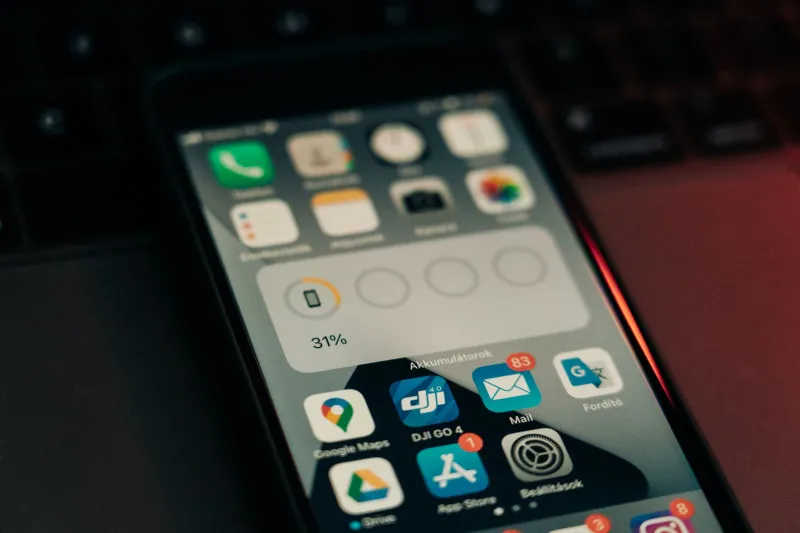
Let's set the scene. It's 11:47 PM. You haven't journaled, you skipped your "mindful movement" block, and you drank exactly one glass of water today — the one you had with your Advil at 2 PM. Your phone is lighting up with notifications. Not from friends. Not from family. From an app shaped like a cartoon fox that is deeply, personally disappointed in you.
Congratulations. Your dopamine is now a product.
We spent an embarrassing amount of time (and a genuinely alarming amount of money) downloading, trialing, and abandoning 47 different habit-tracking applications so that you could read this article instead of, theoretically, touching grass. What we found is a sprawling, pastel-colored industrial complex that has taken the most basic facts of being alive — sleeping, hydrating, moving your body, occasionally going outside — and repackaged them as unlockable achievements in a game you never agreed to play.
The Numbers Are Bleak and Also Kind of Hilarious
Here's what the data actually looks like, and we're being generous with the word "data" because most of these companies guard their retention statistics like nuclear launch codes. Independent app analytics firms have consistently found that somewhere between 70 and 80 percent of health and productivity app users abandon their new download within the first two weeks. Two. Weeks.
Not two months. Not two years. Two weeks — roughly the same amount of time it takes to finish a Netflix limited series you weren't even that into.
Of the users who make it past the fortnight, engagement drops off a cliff around the six-week mark, which is, not coincidentally, right around when most free trials expire and the app pivots from "you're doing amazing sweetie" to "upgrade to Premium to unlock your full potential" energy. The apps know. They always knew. The streak you've been protecting with your entire personality was a retention mechanic, and it worked.
What We Actually Downloaded
The habit app market has fractured into about six distinct personality types, all of which cost money and none of which will fix you.
The Gamification Maximalists — these are the apps that went full RPG. Your morning run gives you XP. Missing a journaling session docks your "life score." One app we tested let you build a virtual garden that wilted in real time when you skipped habits, which is a level of emotional manipulation that would get a human being a restraining order. We watched our pixelated fern die on a Tuesday because we forgot to log that we'd eaten a vegetable, and we felt actual guilt. About a cartoon plant. That we paid $4.99 a month for.
The Minimalist Aesthetic Traps — beige interfaces, sans-serif fonts, and the vague spiritual energy of a $90 candle. These apps contain exactly three features and somehow still charge premium pricing. Their entire value proposition is that they look good in your phone's screenshot when you post about "getting your life together" on Instagram. The app is the content. You are the content. The content is the product.
The Data Hoarders — these ones want everything. Sleep data, step counts, heart rate variability, mood scores rated on a scale of one to ten, food logs, water intake, screen time, and, in one case we are not making up, a field labeled "perceived social connection." By week three you are spending forty-five minutes a day logging data about your life instead of living it, which is a bit like spending your entire vacation photographing the vacation.
The Accountability Theater Apps — these connect you with "habit partners" or public commitment boards where strangers can witness your failure. The social pressure is the feature. Miss your goal and a notification goes out to your accountability group. Nothing says "wellness" like engineering public shame into your morning routine.
The Genius of Commodifying the Obvious
Here's the part that deserves some genuine, reluctant respect: the habit app industry identified something real. Behavioral psychology has known for decades that external cues, reward loops, and accountability structures actually do help people build habits. That part is legitimate science.
What the industry did — and this is where the genius curdles into something a little sinister — is take that legitimate science, strip out the parts that require human connection and intrinsic motivation, replace them with push notifications and premium tiers, and sell it back to a generation already drowning in anxiety about self-optimization.
You don't need an app to tell you to drink water. You know you need to drink water. You've known since elementary school. What the app sells isn't the information — it's the manufactured dopamine hit of closing the ring, filling the bar, maintaining the streak. It's the gamification of self-worth. And once your brain learns to associate "I did a good thing" with "the app acknowledged I did a good thing," you've handed over a piece of your internal reward system to a company whose primary obligation is to its investors, not your hydration.
The Streak Is the Trap
Ask anyone who uses these apps about their "streak" and watch their face change. There's a specific kind of low-grade dread that comes with a 73-day streak and a 9 PM notification. You will reorganize your evening around not breaking that number. You will log a two-minute walk as "exercise" because the alternative is watching the counter reset. You will feel, genuinely, like something has been taken from you when you miss a day — even though what was taken was a number on a screen that you generated yourself.
This is not an accident. Streaks are the oldest trick in the engagement playbook. Snapchat built an empire on them. Language learning apps have made grown adults cry over them. The habit tracking industry just applied the same mechanic to your sleep schedule and called it a wellness tool.
So What Do You Actually Do
We're not going to tell you to delete all your apps and go live in the woods, partly because that's annoying advice and partly because some of these tools genuinely help some people. If a cartoon fox guilting you into flossing is what it takes, fine. Floss. The fox wins.
But maybe — and stay with us here — the goal isn't to optimize every human function into a trackable metric. Maybe some days you drink three glasses of water and some days you drink eight and neither day needs to be logged, scored, or shared with an accountability partner named DaveGrindset47.
Your habits were never a product. Your dopamine was never a feature to be unlocked. And your worth as a person was never, at any point, a number that reset at midnight if you forgot to log your steps.
The apps would prefer you didn't think about that. They have a premium annual plan to sell you.
The cartoon fox is waiting.