You Are Not a Seasonal Collection: The TikTok Aesthetic Churn Machine Is Eating Your Soul (and Your Savings)
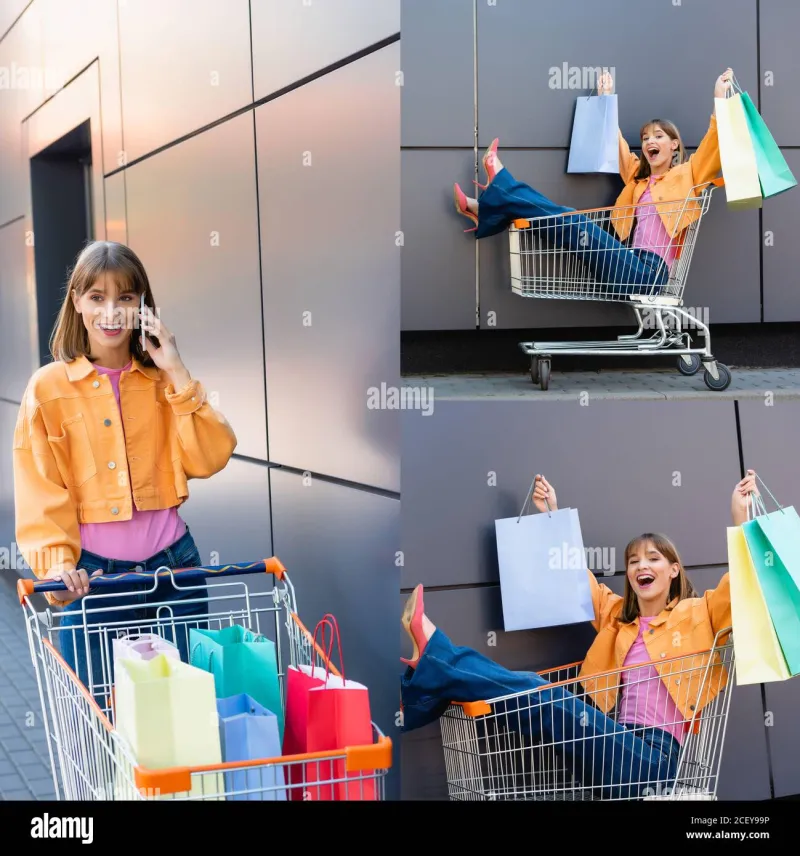
Photo: young woman overwhelmed by clothing shopping bags social media phone, via c8.alamy.com
Somewhere between 2021 and now, you became a product. Not metaphorically — like, actually. You have a target demographic (yourself), a brand identity (your "era"), a seasonal refresh cycle (every six months, minimum), and a marketing budget (your checking account, god rest its soul). You didn't sign the paperwork for any of this. But congratulations: TikTok's Aesthetic Industrial Complex enrolled you anyway, and the welcome gift was a $300 linen wardrobe you wore exactly twice before "cottagecore" became cringe.
This is not an article about hating TikTok. TikTok is genuinely fun and also a psychological experiment conducted on 170 million Americans by an algorithm that has never once experienced a single consequence. Both things are true. What we are here to discuss is the very specific, very profitable hustle of convincing you that your entire identity has a shelf life shorter than a gas station sushi roll.
The Birth of the "Era": When Self-Discovery Became a Content Format
Something shifted when "entering your [blank] era" became the dominant grammar of personal transformation. Suddenly, growth wasn't something that happened slowly over years of therapy and embarrassing journal entries. Growth was a content pivot. You weren't just changing — you were rebranding.
And rebranding, crucially, requires purchasing things.
The "clean girl aesthetic" didn't just mean washing your face. It meant the $46 Laneige lip mask, the slicked-back bun achieved through seventeen specific products, the gold hoops that every single article about the clean girl aesthetic linked to in its first paragraph. "Quiet luxury" wasn't about inner peace — it was about spending $600 on a beige cashmere sweater that communicates, to absolutely no one who will ever see you at Trader Joe's, that you are Very Serious and Have Arrived.
The aesthetics themselves aren't the problem. The velocity is the problem. The average TikTok aesthetic trend now has a lifespan of roughly four to eight months before the algorithm decides it's oversaturated and the comment sections start filling up with "this is giving 2022" as if that's a war crime verdict. You barely finished buying the mood board before the mood board became a meme.
The Algorithm Doesn't Want You to Have a Personality. It Wants You to Have Content.
Here's the thing nobody in the "aesthetic" content space will say directly: a stable, settled, genuinely-content-with-herself person is a monetization disaster. She doesn't need the haul. She doesn't need the "apartment refresh." She doesn't need the seventeen-step morning routine that somehow also requires a specific $80 water bottle to complete correctly.
The machine runs on dissatisfaction. Specifically, the low-grade, aesthetically-adjacent dissatisfaction that doesn't feel like suffering — it feels like potential. Like you're one linen tablecloth away from becoming the person you were always supposed to be. The algorithm has gotten extraordinarily good at identifying that frequency and broadcasting directly into it, 24 hours a day, through a device you keep within arm's reach while you sleep.
This is not an accident. Recommendation engines are optimized for engagement, and nothing drives engagement like aspirational discontent. The content that performs best is the content that makes you feel like you're almost there — like the life you want is real and achievable and currently on sale at Urban Outfitters.
The Psychological Tab Is Getting Expensive
Researchers who study identity development — an actual field, populated by actual humans who went to school for a very long time — have found that adolescents and young adults need extended periods of exploration to develop a stable sense of self. That process takes time. It's supposed to be messy and nonlinear and occasionally embarrassing. It's supposed to involve phases you'll cringe at later.
What it's not supposed to involve is an external content engine refreshing those phases every six months and attaching a shopping list to each one.
The psychological toll of treating your identity like a seasonal collection is real and underreported. There's a specific kind of exhaustion that comes from never quite landing — from always being between eras, always in the transitional phase, always consuming content about who you're becoming rather than actually becoming it. Therapists (the real ones, not the ones doing "therapy check-ins" over trending audio) have a word for this: it's called identity diffusion, and it's significantly less fun than the TikTok version makes it look.
Meanwhile, the financial damage is quantifiable. A 2023 survey found that Gen Z spends an average of $2,500 annually on items directly influenced by social media trends — and that number almost certainly undercounts the "I was going to buy this anyway" self-delusion discount most of us apply to our own spending. The cottagecore mushroom print dress you absolutely needed in September 2022 is in a donation bin right now. The "that girl" water bottle is in a cabinet. The dark academia cardigan is doing fine, actually, because cardigans are eternal, but you get the point.
So What Do You Actually Do With This Information
Here's the uncomfortable part: there's no clean exit. You can't just log off and develop a stable sense of self over a long weekend. The aesthetic churn machine is built into the infrastructure of how we socialize, date, work, and communicate now. Opting out entirely means opting out of a significant portion of contemporary cultural life, which is its own kind of loss.
But you can, perhaps, develop a slightly more adversarial relationship with the urgency.
When you feel the pull of a new aesthetic — the sudden conviction that your current wardrobe is spiritually incorrect and your apartment is giving the wrong energy — it's worth sitting with that feeling for approximately thirty seconds before opening your browser. Ask yourself: Is this desire, or is this content? Is this something you actually want, or is this the algorithm doing its job, which is to make you feel like you're missing something that can be purchased?
You are allowed to have a consistent personality. You are allowed to wear the same style of jeans for three consecutive years without it being a moral failing. You are allowed to be in your "same person you were last year era" without announcing it to anyone.
Your identity does not need a rebrand. It needs, at most, a light dust and maybe some new socks.
The algorithm will survive your refusal to perform yourself for it. Probably. And if it doesn't, honestly, that's fine too.